The
Art
of Engineering greener (soft computing) software
WCCI'26, Maastricht
JJ Merelo, university of Granada, Spain, jmerelo@ugr.es
Or, how Dutch art (and history) can help us save energy in our evolutionary algorithms
Greatest Dutch invention
🎨 Renaissance!
Art is about problem solving via optimization
Computers need power to operate
Boy, do they need power...
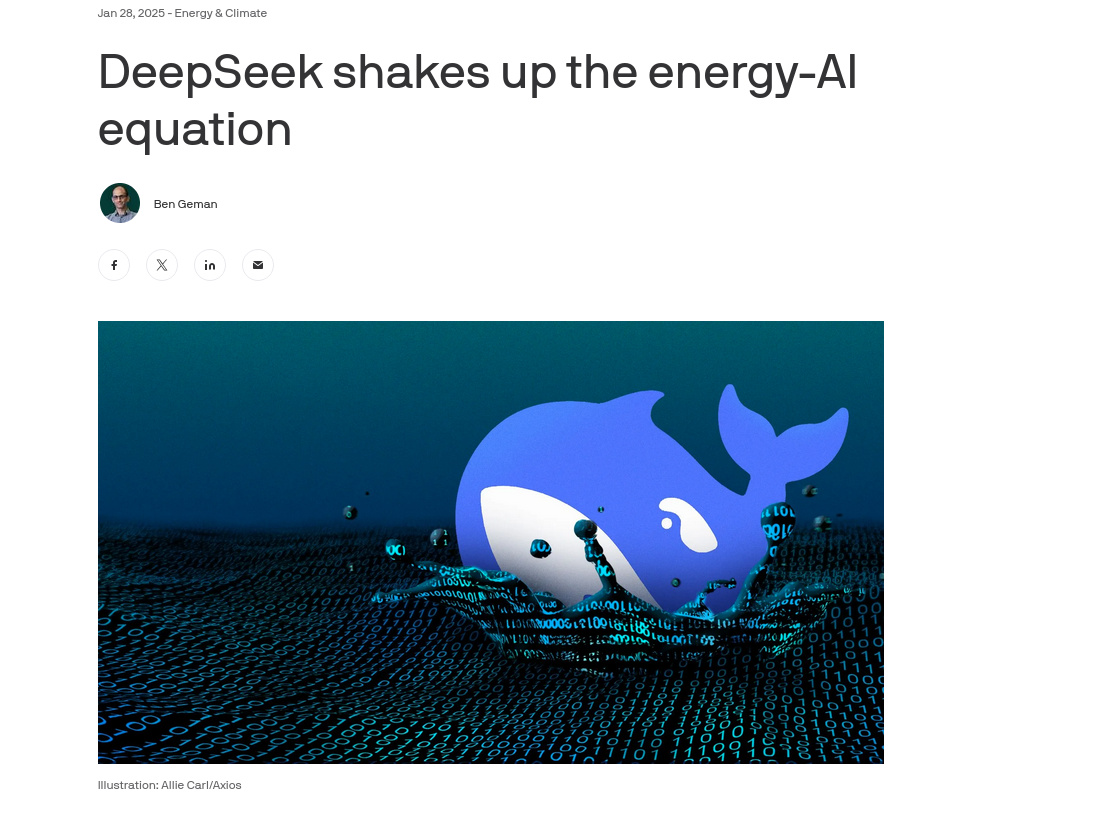
But also...

Engineering: creating software that meets certain standards
And one of those standards is energy efficiency
Moore's law is dead
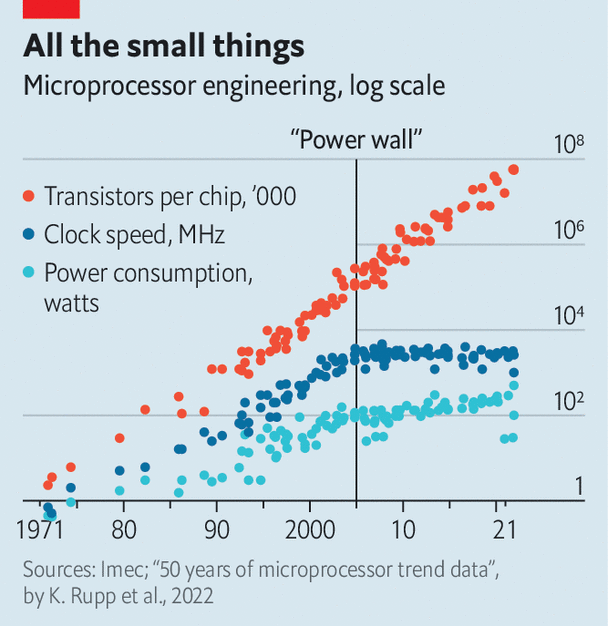
You can't make applications run much faster
Make them greener
So, why do we need greener (soft computing) software?
Better engineering of algorithm implementations
Hyperheuristics
Let Nature be your guide!
Tutorial organization
Energy/power and all that
How and where power is spent
Measuring energy spent
Modeling energy consumption
Some hints at improvement
We need to understand
What are we measuring
How can we measure it
How can we measure our stuff
Energy = power x time
It's what you pay for
What are we measuring
Socket ~= Processor → z chiplets → x cores → y threads
DRAM/Memory
GPUs
Other units: Apple Neural Engine Architecture, for instance.
Cores/chiplets are not homogeneous
P cores for performance, E cores for (energy) efficiency
Multi-die architecture
Sometimes with heterogeneous frequency/voltage
System does its best to keep processor temperature in a range
Different states change frequency and voltage
Baseline: the operating context changes all the time
We need our applications to ride this system
And extract as little power from it as possible
Good (green) engineering can help
Working with it, not against it
Because that is how applications will eventually run
You can't isolate the energy your application is spending
You can mostly measure the whole system
Yet you need to measure a single application
Use system APIs and interfaces
Using seudo-registers or system calls to place estimates
IOreport for Apple
Other devices have different interfaces
Running average power limit: RAPL
Prevalent in the Intel world (including AMD)
Provides registers that estimate energy usage
PKG or "package",
includes all on-chip energy consumption
Intel chipsets have more granularity: memory, core/PP0, uncore/PP1, "PSys"...
Measuring energy consumed by an application
Command line tools
Language-specific libraries
Let's check the marketplace
| Command | Platforms | Attaches to command |
|---|---|---|
scaphandre | RAPL, others | Sometimes |
pinpoint | RAPL, IOReport for M1/M2, others | Yes |
perf | Linux | No |
pumas | Mac | No |
🤿 scaphandre for process-level power
meter
sudo julia  examples/BBOB_sphere_with_baseline.jl 40 10000 50 10 256 &
sudo time scaphandre stdout -s 1 -p 10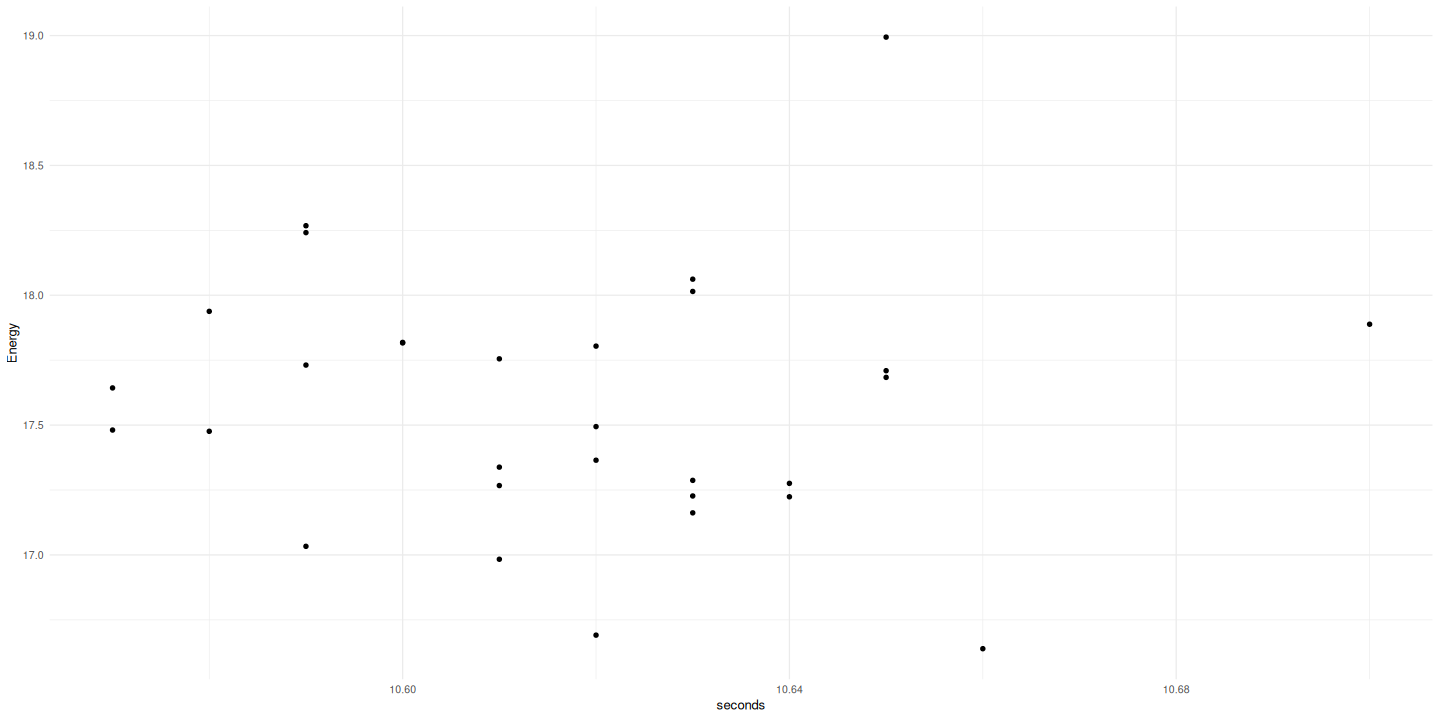
Using pyJoules
import sys
from pyJoules.energy_meter import measure_energy
from sacrypt import process_text_v0

@measure_energy
def run_process(process_func, file_path):
    process_func(file_path)

if __name__ == "__main__":
    run_process(process_text_v0, file_path)
sudo make me a sandwich
$ sudo ./.venv/bin/python bin/sacrypt-energy.py ../data/3romanzi.txt v1
begin timestamp : 1742670844.3934789; tag : run_process; duration : 0.08716917037963867; package_0 : 3239548.0; core_0 : 55554.0; nvidia_gpu_0 : 1150We need a methodology
Use different parameters
Repeat for statistical significance
Analyzing Italian literature

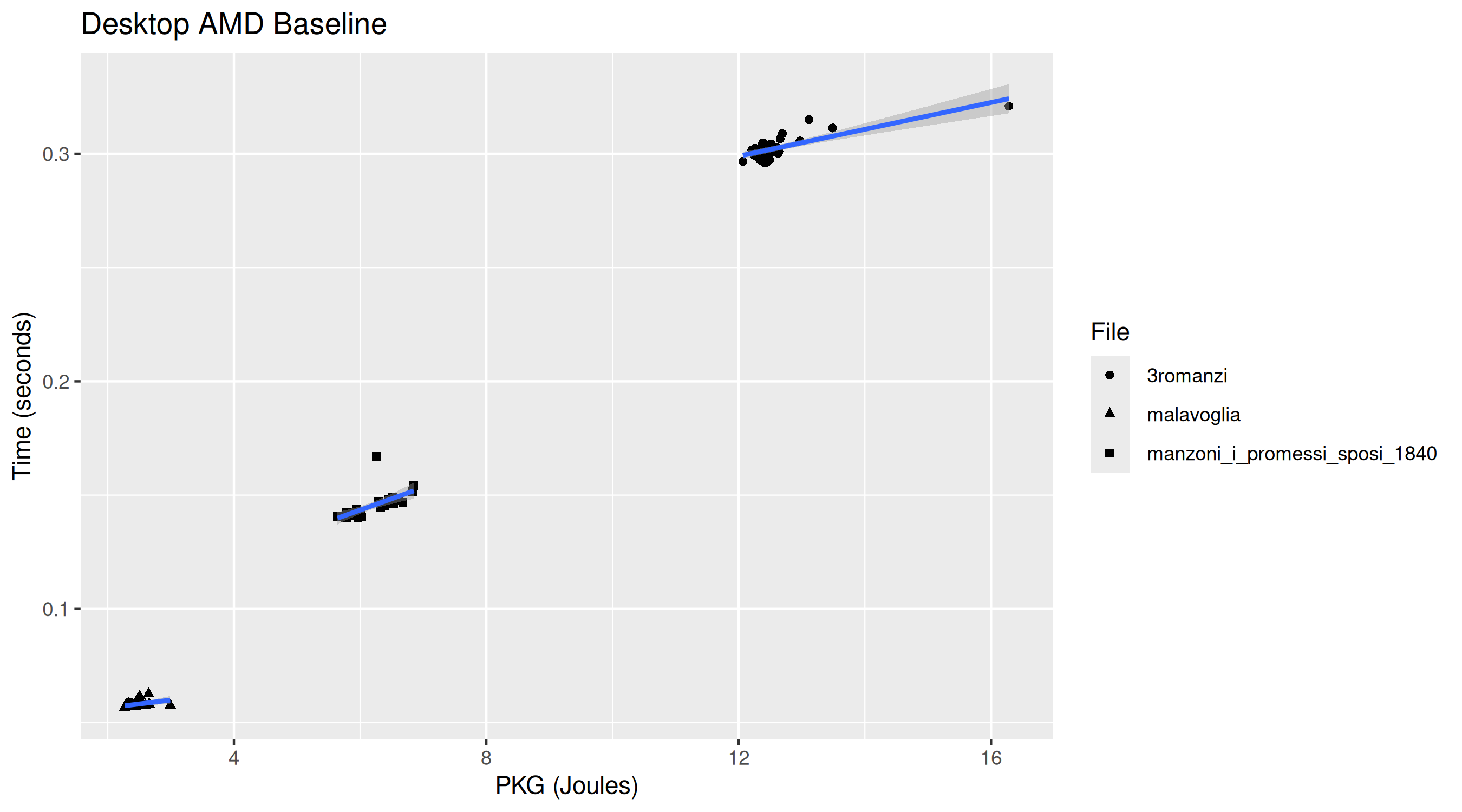
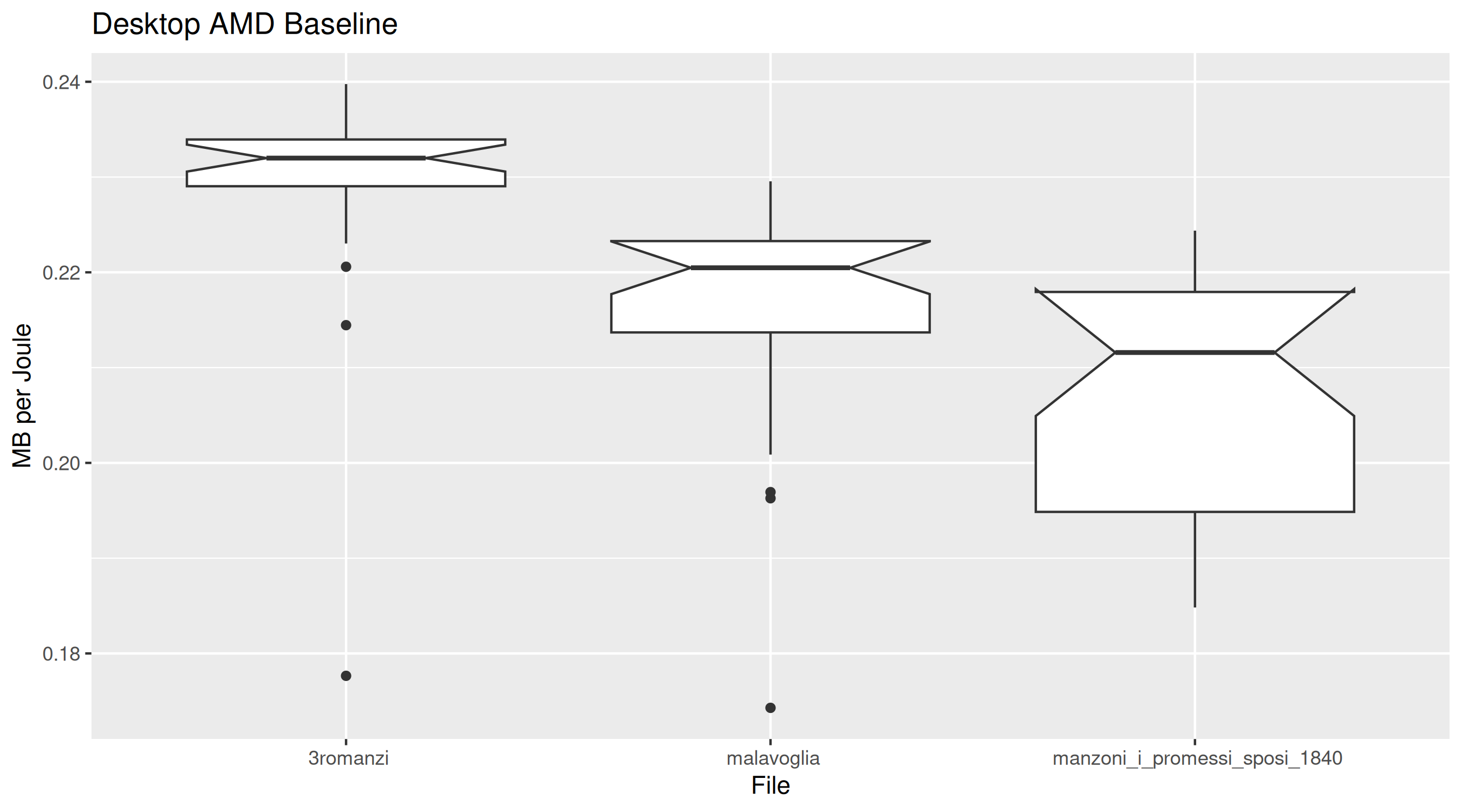
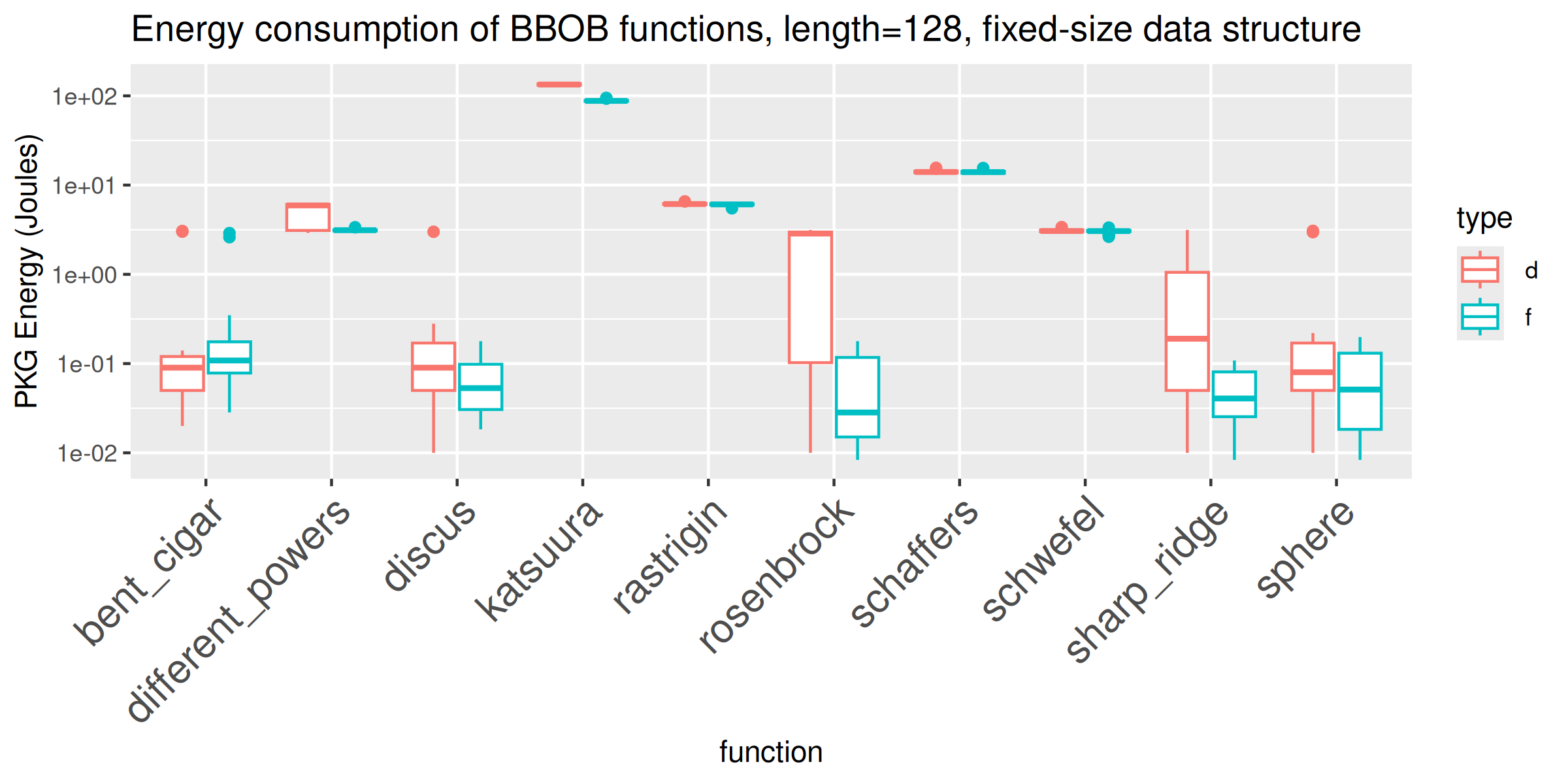
Or BBOB functions
One does not just measure
Experimental design is needed
But we're measuring the whole system here
A baseline that eliminates system overhead is needed
We can't do that from the program itself
E(measured) = E(workload) + E(framework) + E(system)
System, or framework, or both need to be isolated
Measuring only energy spent by our workload
E(Workload) = E(measured) - E(baseline)
Baseline includes operating context + runtime overhead
Establish a baseline
$ sudo pinpoint sleep 1
Energy counter stats for 'sleep 1':
[interval: 50ms, before: 0ms, after: 0ms, delay: 0ms, runs: 1]

	10.64 J nvml:nvidia_geforce_rtx_4070_super_0
	22.17 J rapl:pkg

1.00109098 seconds time elapsed 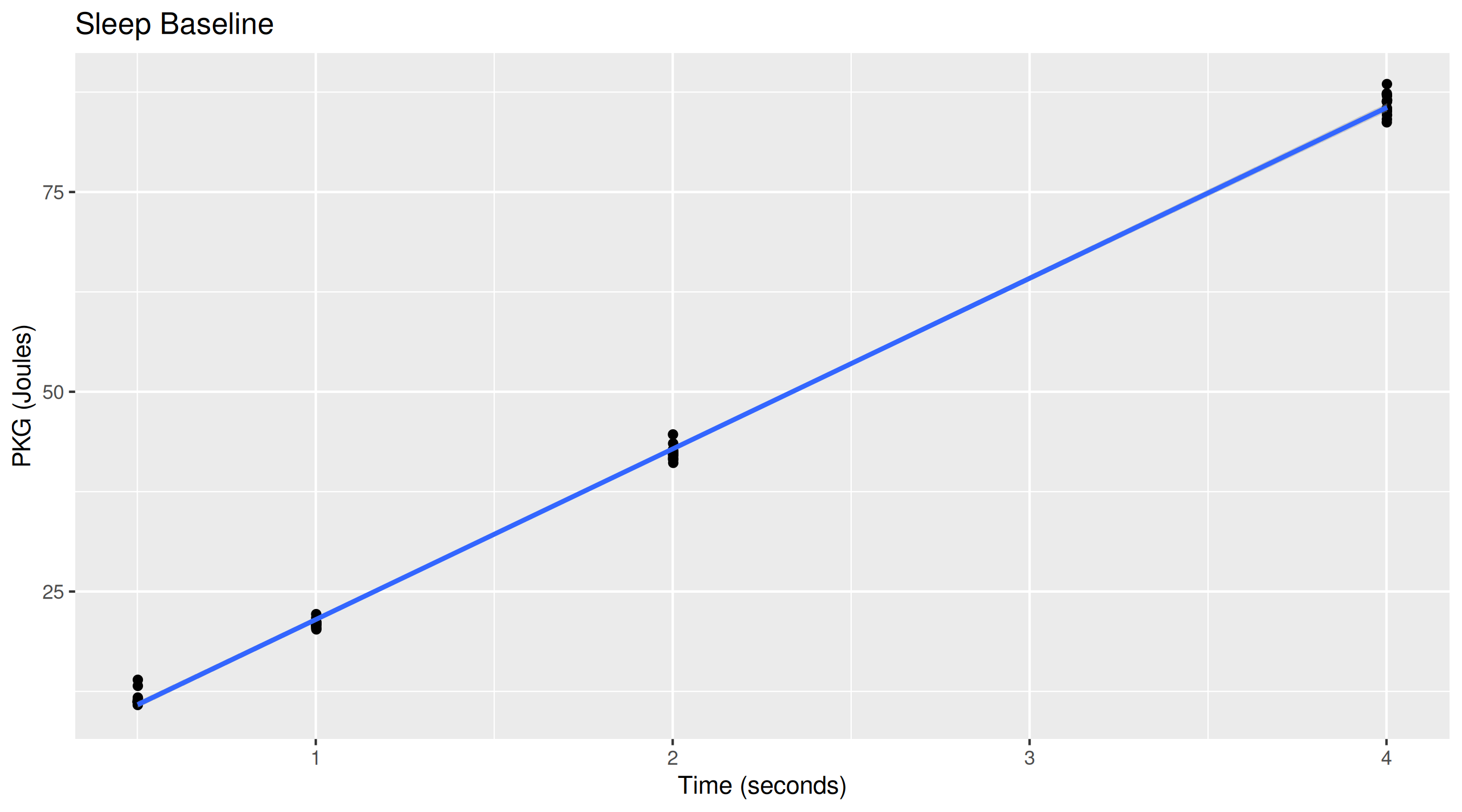
Looking again at Italian literature
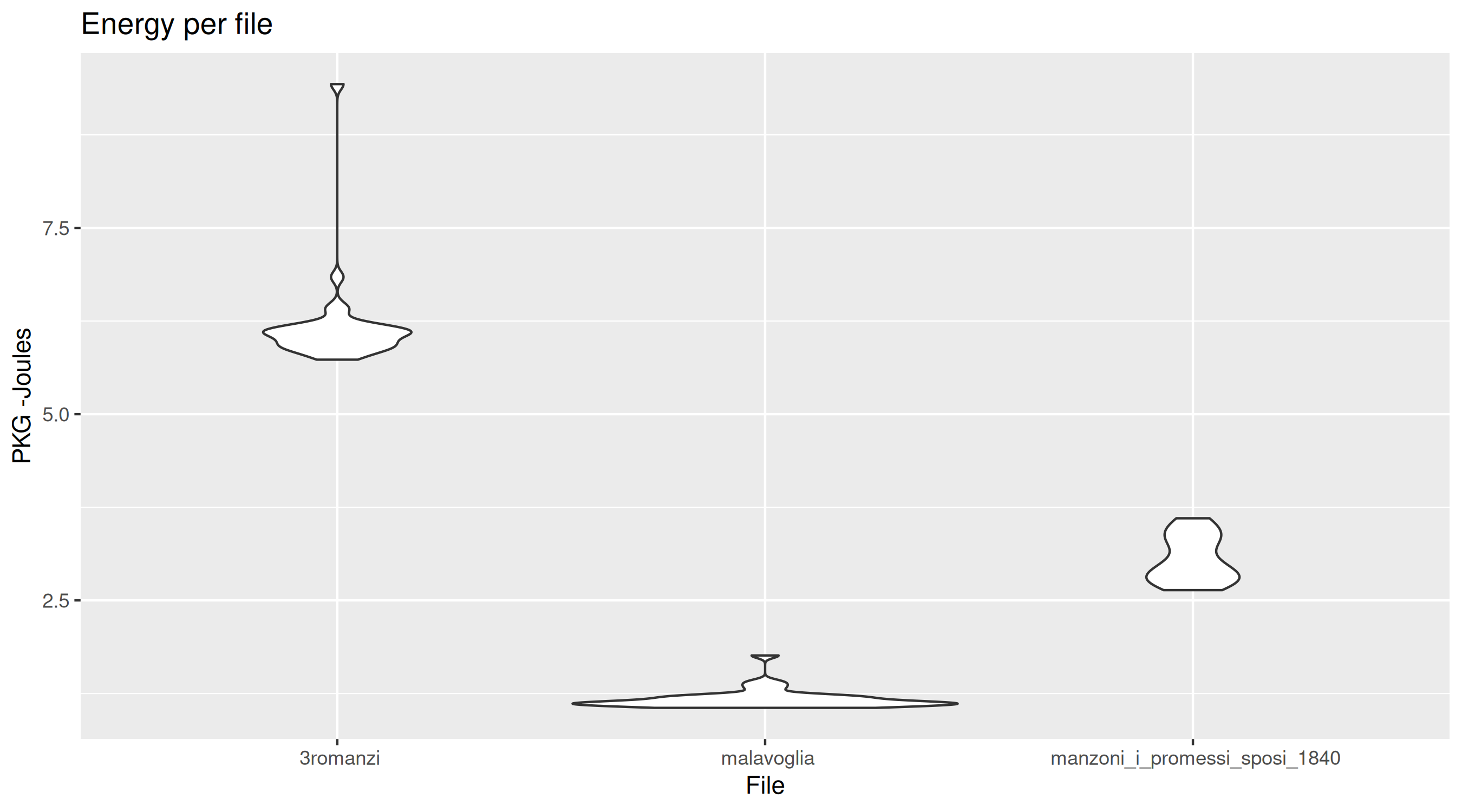
But it's a bumpy road...
Very high variability
Operating context matters
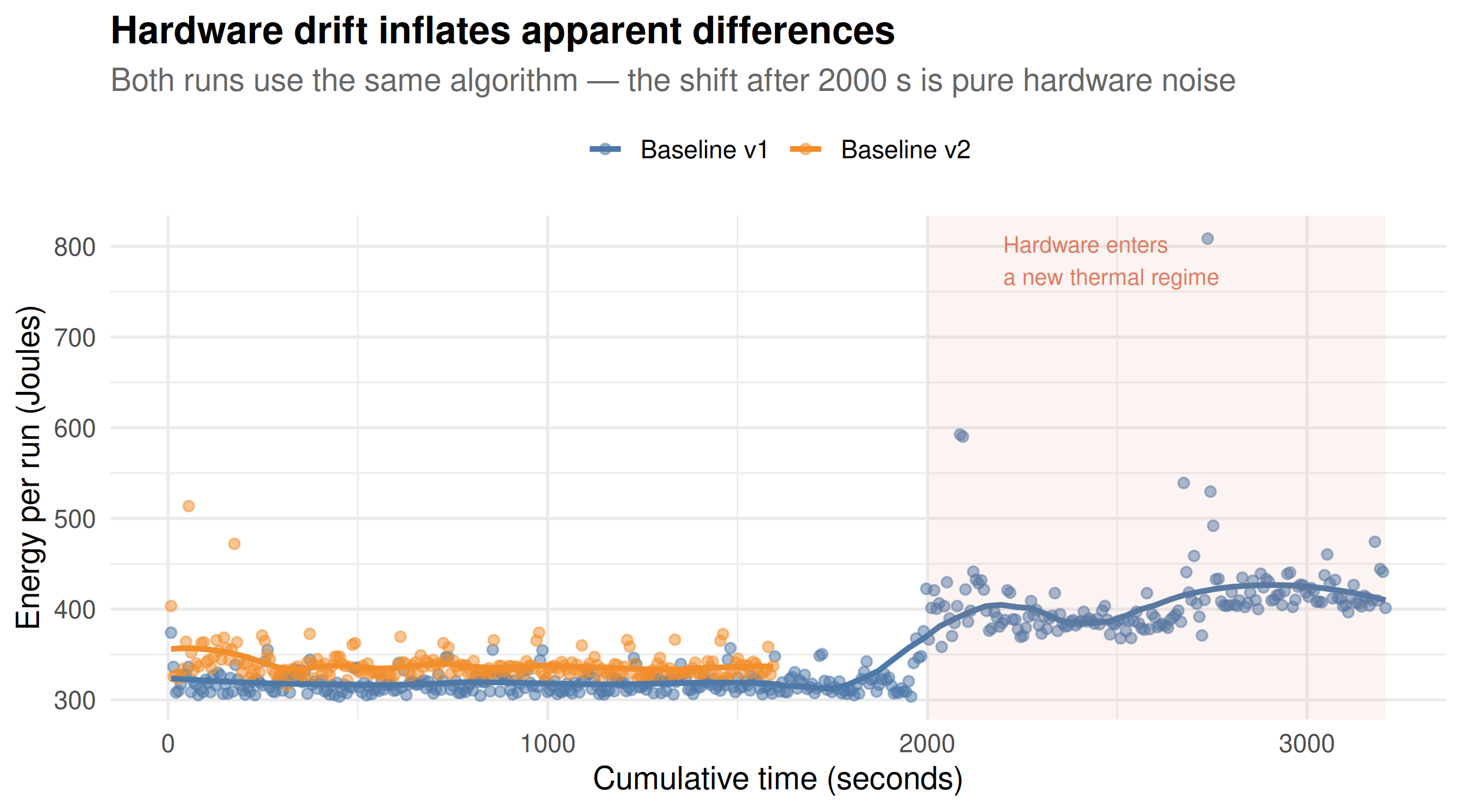
Taken from Best practices in measuring energy consumption in population-based metaheuristics
Interleave workload-baseline measurements
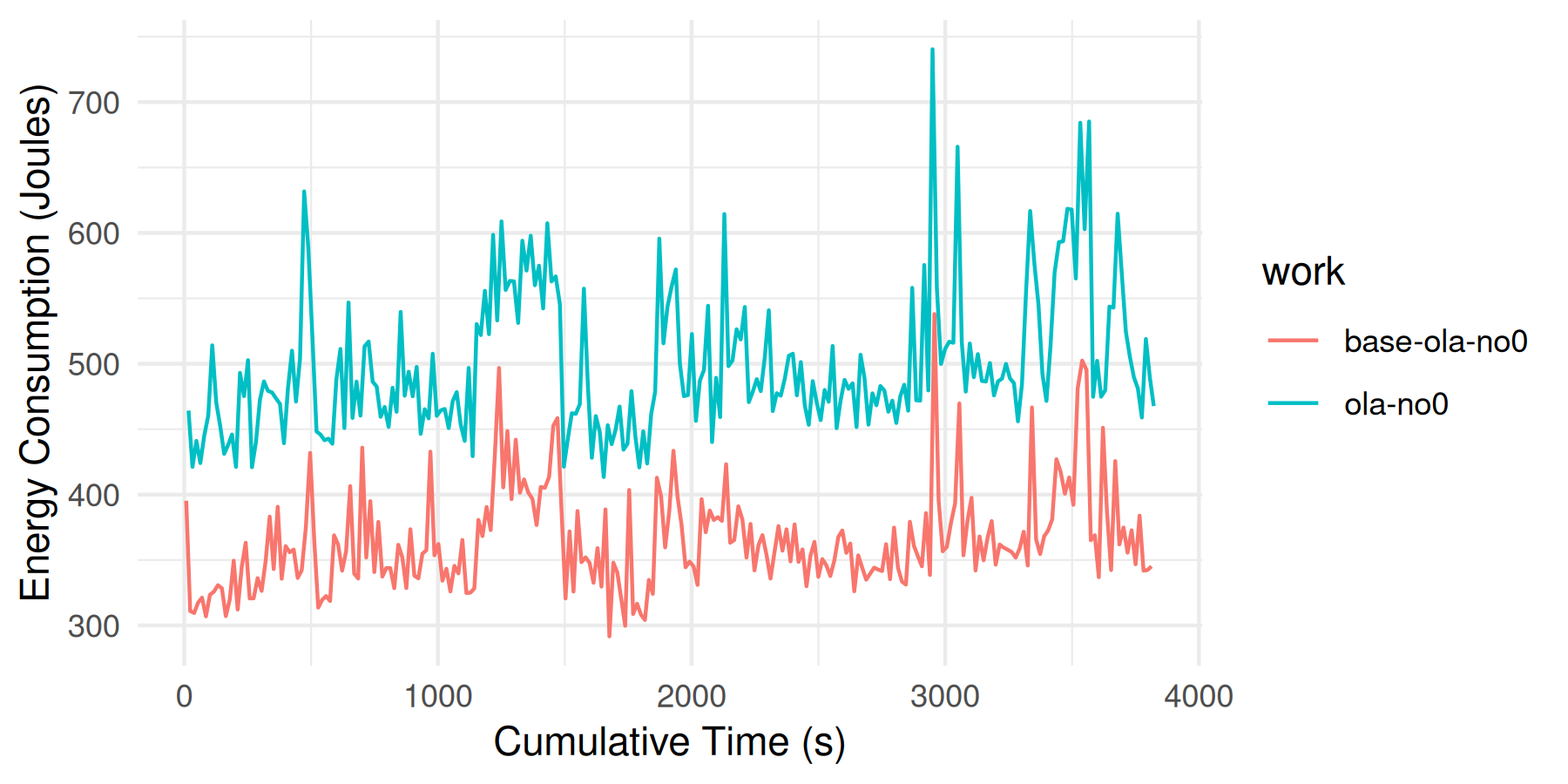
Still high variability? Repeat for statistical significance
Also for changes in operating context
But the experiment itself changes operating conditions
Baseline sandwich ⇒ a workload between 2 baseline runs
E(Workload) = E(measured) - (E(baseline-before)-E(baseline-after))/2
Are we there yet?
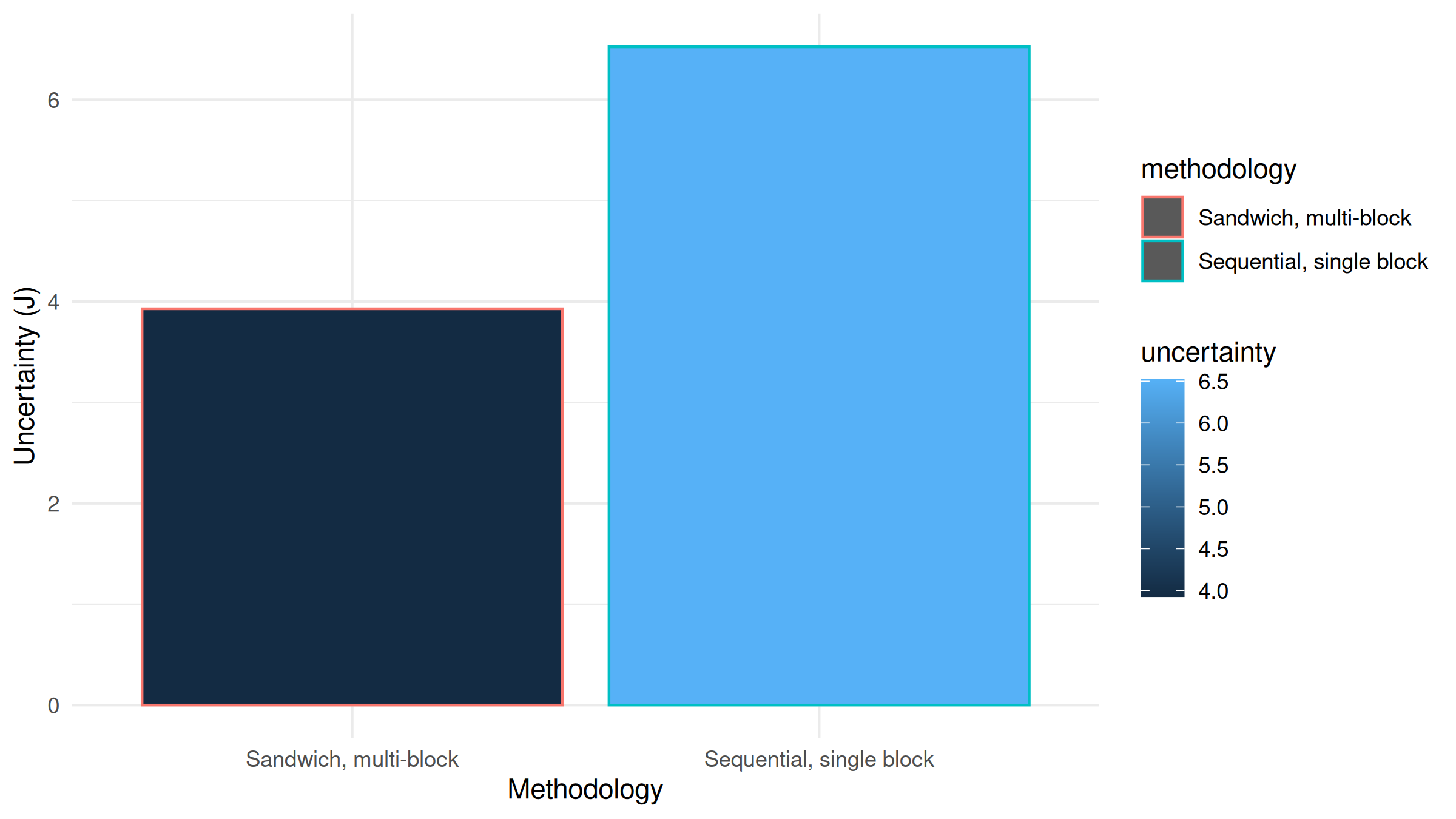
How do we know that?
Because we have a model
How does energy consumption change?
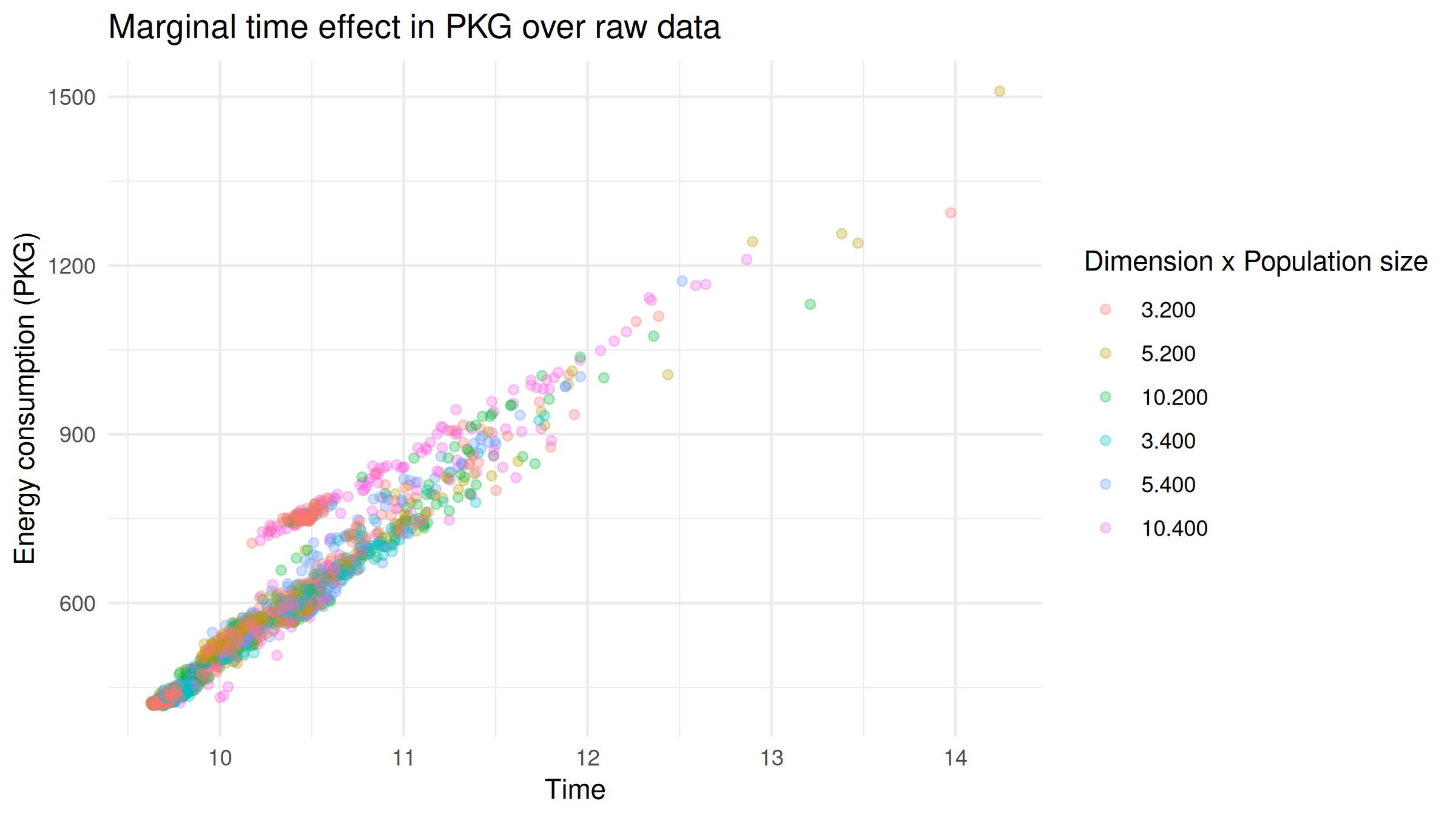
We are interested in modelling the effects of our parameters
Two-stage statistical modelling
First: Model time as a function of problem configuration
Second: Model energy (PKG) as a function of residual time and problem parameters
We have an (interesting) model
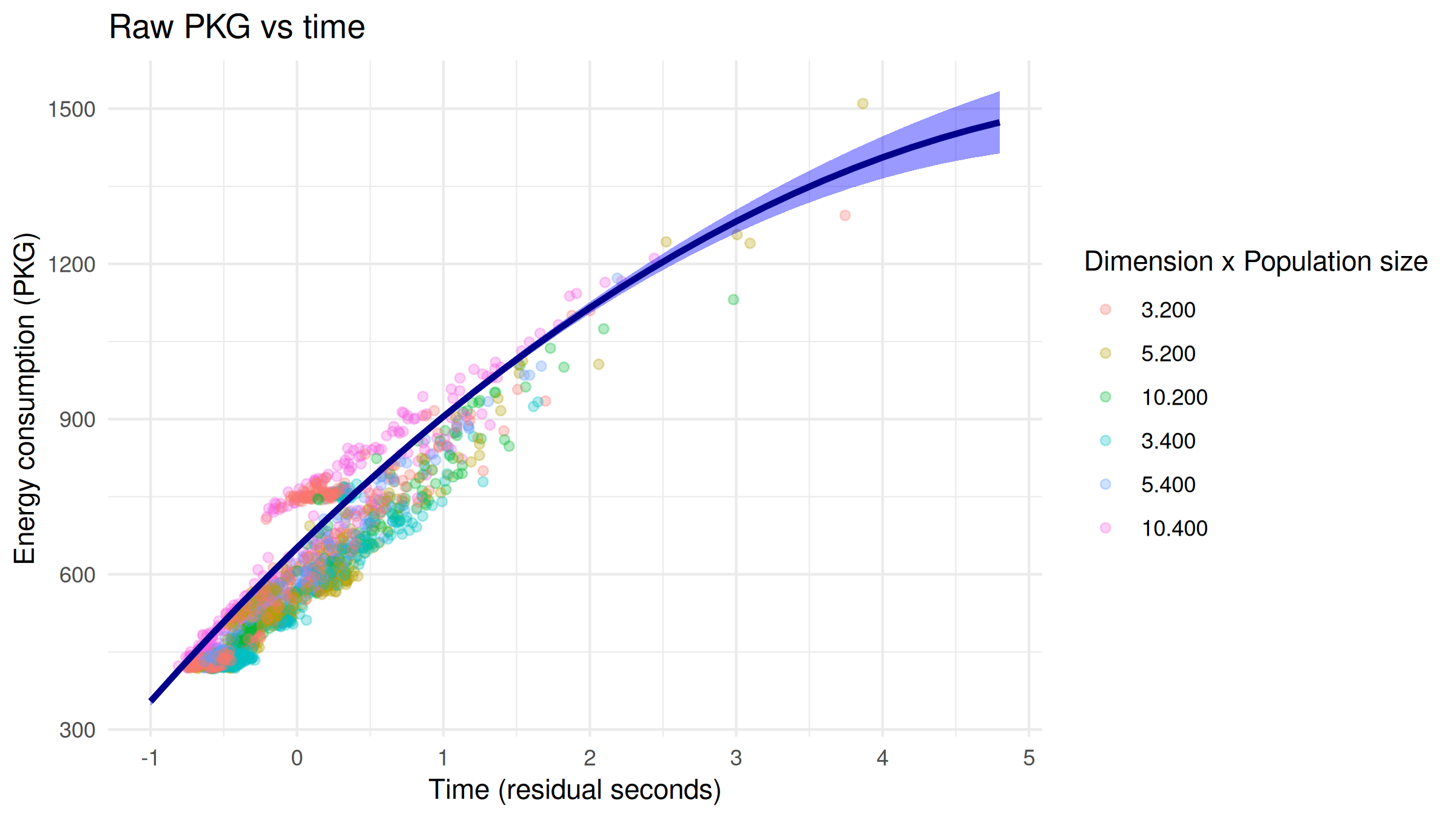
Are we there yet?
We understand well enough how energy consumption changes
And how much
To make some decisions
Digging for data
Until we find it
There are two dimensions in running time
Variability or noise: operating context
Raw performance
First level of approximation
Want to spend less energy?
Make your algorithm run faster!
Choices for greener algorithms: many moving parts

Machine/OS/Hardware platform
Language
Language-specific optimizations
Some rules of thumb for energy savings
Hardware: several orders of magnitude
Language 2-3 orders of magnitude
Program: 1 order of magnitude
Trade-off energy/time
At the hardware/language level, at least
There's no free lunch, but we can have very cheap lunch at the program level
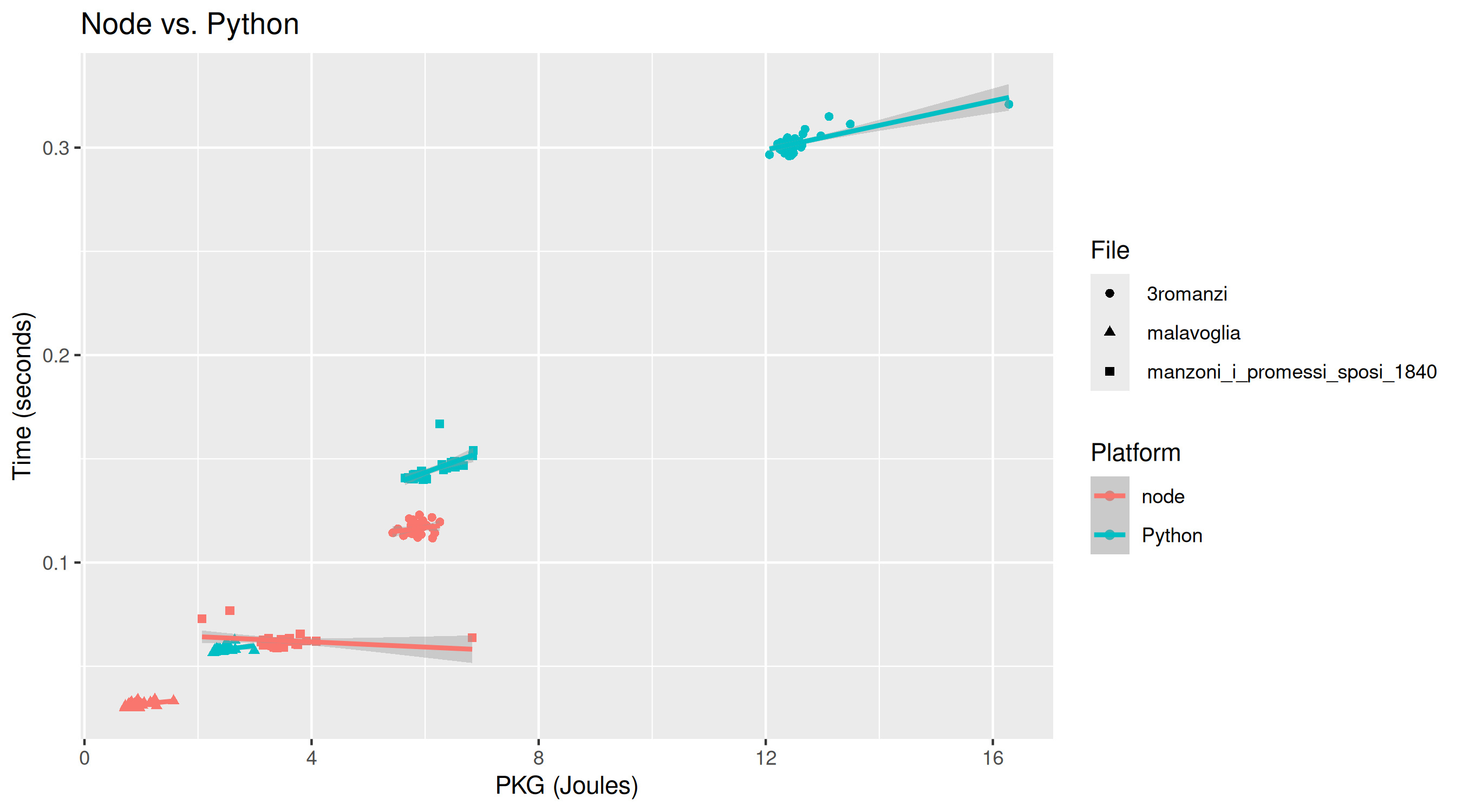
Can we beat Python
JavaScript is a very popular language
% Copilot rewrite this in
                    node.js
Leaving Python in the dust
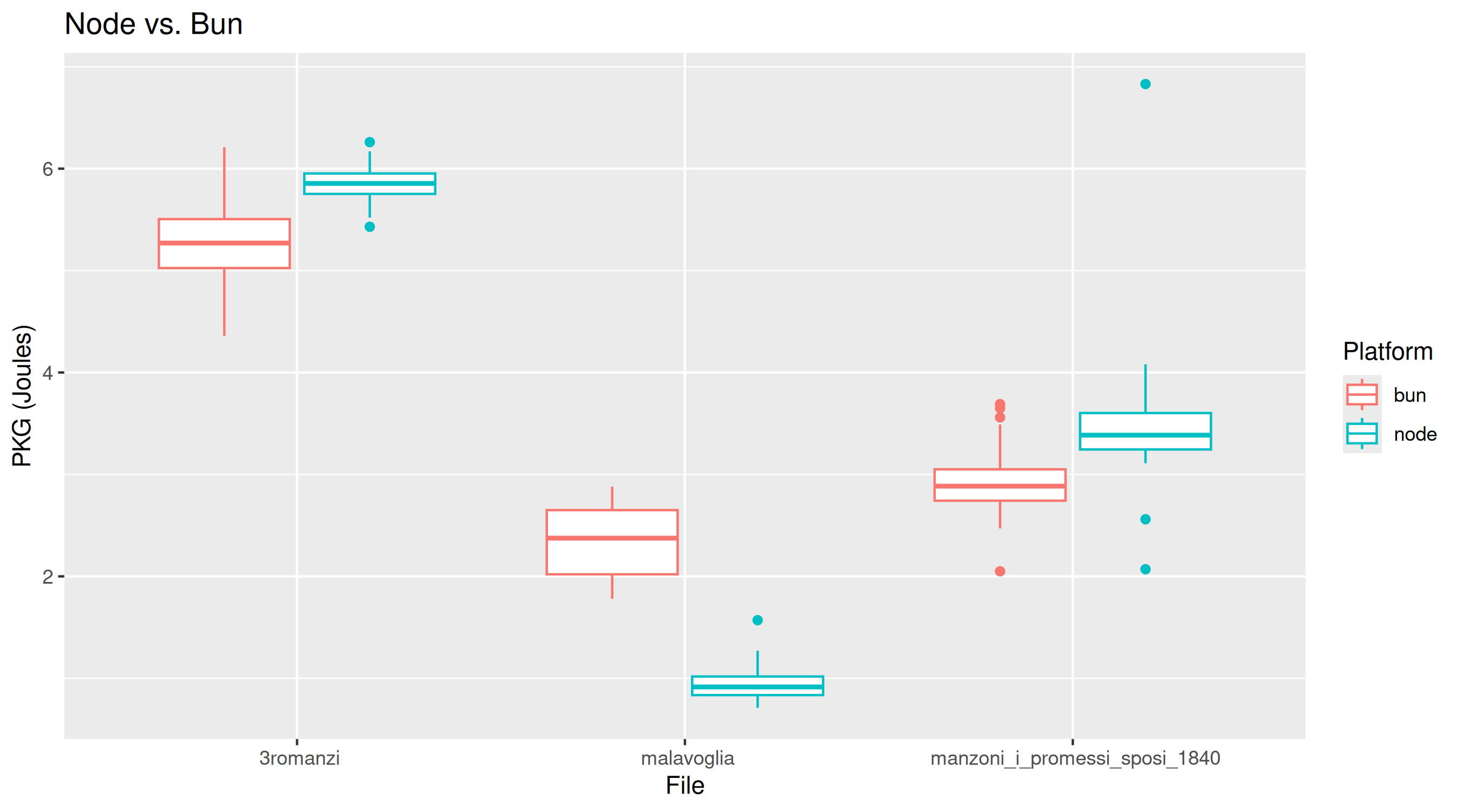
What about different interpreters for JavaScript? node vs. bun
Different levels: it's complicated
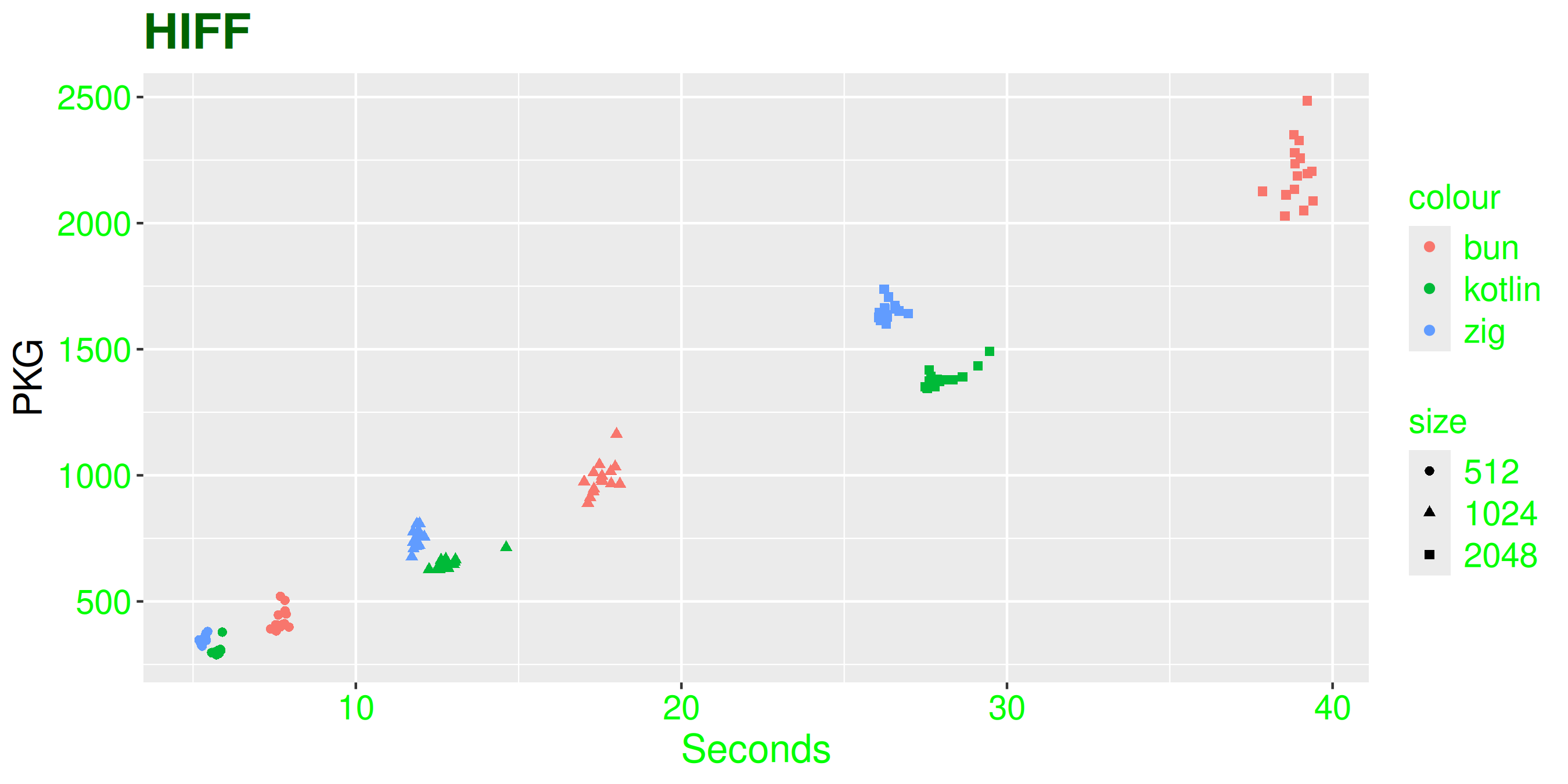
Measuring is important
Repeat for statistical certainty
Saving time is saving energy
Future work

 Merci! Nog vraoge?